
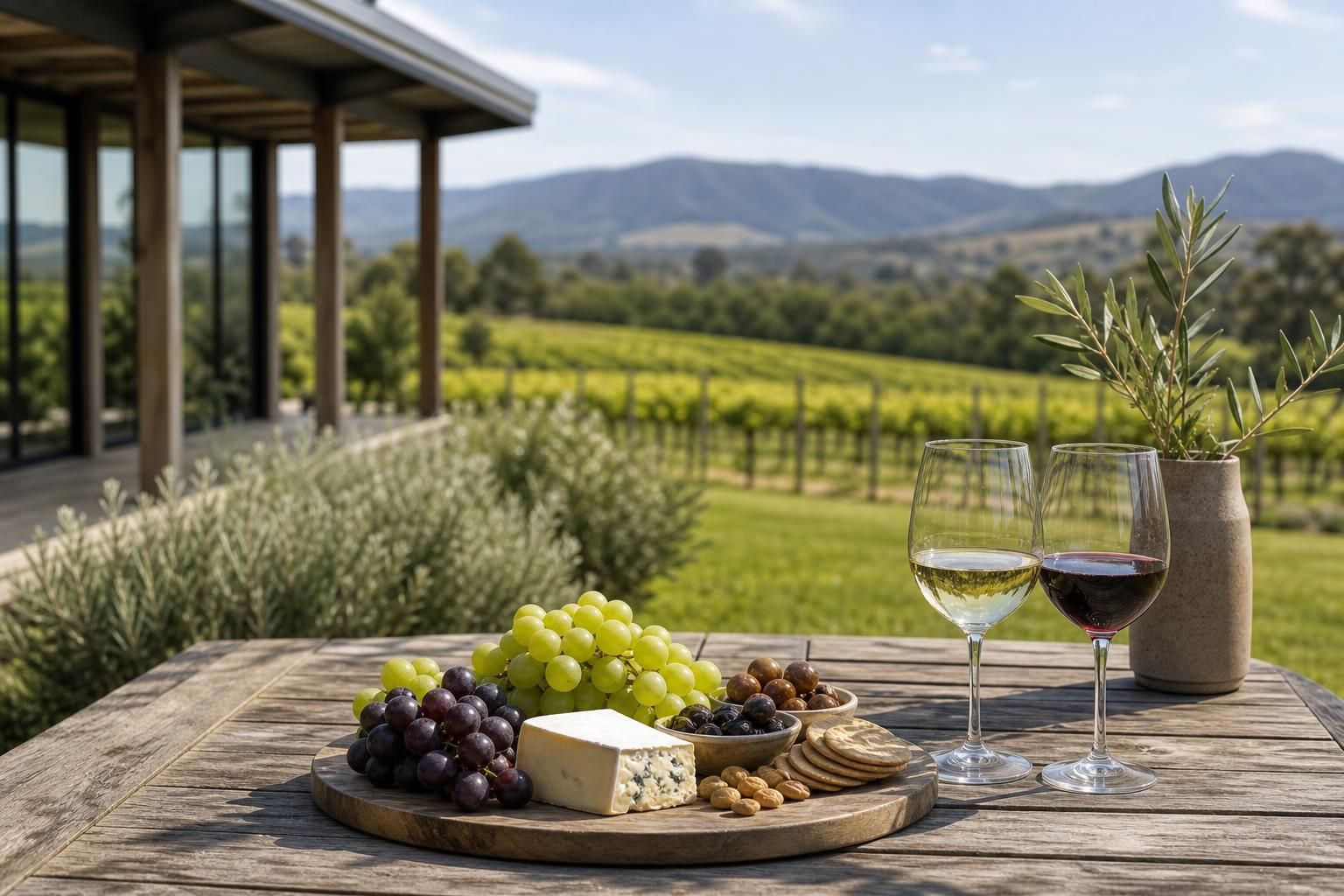
A wine tasting tour in Australia usually means one driver, four to six hours in a wine region, and three to five cellar doors where you taste rather than buy by the glass. The main decision you are making is not which wines you like, it is which region you can reach and back in a day, and whether you want a small private group or a seat on a bigger bus.
If you are starting from Melbourne, that narrows quickly. The Yarra Valley is roughly an hour north east of the city. The Mornington Peninsula is roughly an hour and a bit south east. Both are genuine day trips with time to eat properly. Anything further afield, the Grampians, Rutherglen, the Barossa in South Australia, is an overnight trip rather than a tour that gets you home for dinner.
What actually happens on the day
A typical tour runs something like this.
- Pickup. Either from your home, your hotel, or a set meeting point. Door to door pickup is the whole reason most people book, so check it is included rather than an extra.
- First cellar door, mid to late morning. You will usually be seated or standing at a bar with a tasting flight of four to six wines. Someone talks you through them. It takes 45 minutes to an hour.
- Second cellar door. Same again, usually a different style. A good itinerary contrasts things: sparkling then pinot, or a big estate then a small family maker.
- Lunch. Somewhere between one and two hours. This is the part people underestimate. A long lunch is lovely but it eats a winery.
- One or two more stops. Often a smaller producer, sometimes a cheese, gin, chocolate or brewery stop to break up the palate.
- Home. Late afternoon to early evening depending on how far you have come.
Most tastings cost a small fee at the cellar door, often waived or credited if you buy a bottle. Ask whether tasting fees are in your tour price or paid on the day, because that changes what you spend.
Yarra Valley or Mornington Peninsula?
Both are excellent. They are not the same day out.
Yarra Valley is cool climate, best known for chardonnay, pinot noir and sparkling. It has the big recognisable names with restaurants and views, plus plenty of tiny producers down side roads. Distances between wineries are a bit longer, and the landscape is hills and paddocks. It suits first timers and groups who want the classic postcard day.
Mornington Peninsula is also pinot and chardonnay country, with a stronger showing of pinot gris. Cellar doors sit closer together, so you can fit stops in without long stretches in the van. It pairs well with the coast, and you can add a hot springs or a beach stop if that suits your group.
If someone in your group is not a big wine drinker, mention it when you book. Both regions have gin, cider and beer stops that can be worked into the route.
Private tour or shared seat
This is the biggest single factor in what you pay and how the day feels.
A shared or scheduled tour puts you with strangers on a set itinerary. It is cheaper per head and fine if you are a couple or a pair of friends. You go where the group goes and you leave when the group leaves.
A private tour means the vehicle is yours. You pick the wineries, or you tell the operator what you like and they build it. You can sit longer at a place you are enjoying and skip one you are not. It makes sense from about four people up, and it is close to essential for birthdays, hens days, work groups and anything where people want to talk to each other rather than to strangers.
Group size matters more than people expect. Eight to eleven in a small bus is a conversation. Forty on a coach is a queue at every cellar door.
What to check before you hand over a deposit
- Is the vehicle and driver properly accredited for paid passenger work in Victoria? Any legitimate operator will answer this plainly.
- Are winery bookings made in advance? Popular cellar doors turn away walk ins on weekends. A real itinerary has reservations behind it.
- Is lunch booked, and is it included or extra? Both are normal. Just know which.
- Tasting fees in or out? As above.
- Pickup radius. Suburb by suburb, some areas cost more or are outside the zone.
- Cancellation and weather policy. Wine tours run in the rain. Know what happens if someone in the group gets sick.
- Can you buy wine along the way? You should be able to. Ask whether there is room to carry cases.
Timing your booking
Weekends in spring and autumn book out first, and so do the good lunch tables. If you have a fixed date, especially a Saturday between September and December, get in early. Weekdays are quieter, cellar door staff have more time for you, and you often get a better run at the smaller producers.
Vintage, roughly February to April, is a busy and interesting time to visit. You may see fruit coming in. You may also find winemakers are flat out and less available for a chat.
Practical things that make the day better
- Eat breakfast. Tasting starts earlier than you think.
- Bring water and drink it between stops.
- Wear layers. Cellar doors and barrel rooms are cold even in summer.
- Skip strong perfume or aftershave. It sits over the wine for everyone near you.
- Use the spittoon if you want to last the day. Nobody judges you for it.
- Bring a card, not just cash. Most cellar doors are card only now.
- If you buy, ask about shipping. Cases can be sent rather than carried.
Is a wine tour worth it versus driving yourself?
If you want to taste anything, yes. Victorian drink driving limits mean the driver is either not tasting or barely tasting, which usually means one person in the group has a much worse day than everyone else. Tours also remove the navigation, the parking and the timing between bookings, which is the part that quietly ruins self drive days.
The other real benefit is access. Operators who work a region every week know which small cellar doors are worth the detour, who is pouring something new, and which place will look after a group of eleven on a Saturday without making it awkward.
FAQ
How many wineries can you actually visit in one day?
Three to five is realistic with a proper lunch. Six is possible if you cut lunch short and the cellar doors are close together, but the last two tastings blur. Four plus lunch is the sweet spot for most groups.
Do you have to buy wine?
No. Tasting fees cover your pour. Many cellar doors credit that fee toward a bottle, which is why people often buy one, but there is no obligation and no one expects it.
Can you do a wine tour without drinking much?
Yes, and it is more common than you would think. Designated non drinkers, pregnant guests and people who just want the food and the scenery all come along. Tell the operator so lunch and stops are chosen with that in mind.


Our Winery Tours
Book Now
Let us help plan your perfect wine tour, tailored to your group, taste and schedule.


